Leadership as Stewardship
Leadership within Sanctum is a position of service, not privilege. Leaders hold authority on behalf of the community and the long-term mission, not for personal advancement or control.
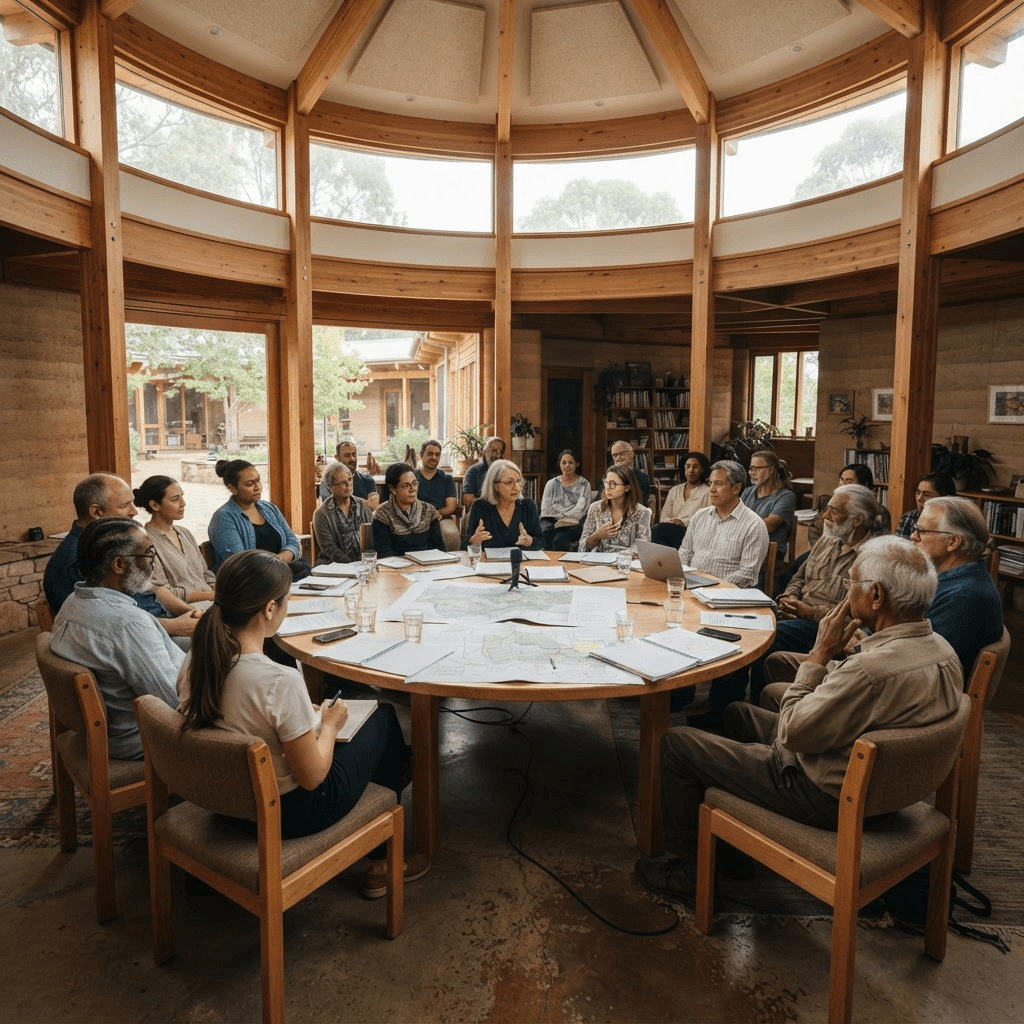
Governance Philosophy
Responsible leadership, defined authority, accountability and protection from the concentration of power.
The Governance Philosophy
Most organisations build their governance frameworks after the problems arise. Sanctum is taking a different approach: developing the governance philosophy, constitutional framework and institutional safeguards before any formal authority structures are established or any community is formed.
This is not bureaucracy for its own sake. Communities most often fail not because of a lack of resources, but because of poor governance: ambiguous authority, unaccountable leadership and the absence of enforceable principles.
The governance framework being developed for Sanctum is intended to prevent these failures before they occur.
Core Principles
Nine interconnected principles that form the governance philosophy being developed for Sanctum.
Leadership within Sanctum is a position of service, not privilege. Leaders hold authority on behalf of the community and the long-term mission, not for personal advancement or control.
Every leadership role has clearly defined authority, scope and limits. No person holds unlimited authority, and no role may be used to circumvent the governance framework.
Those who hold authority within Sanctum are accountable for how they exercise it. The governance framework creates the structures through which accountability is maintained.
Governance decisions, processes and outcomes should be visible to those they affect, ensuring those who are governed can understand and evaluate the decisions that shape their lives.
One of the most important functions of governance is to prevent the concentration of power in any single person, role, family or faction. Distributed authority and checks and balances are essential.
Those who hold authority must not use it for personal gain, nor permit personal interests to influence decisions that should be made on behalf of the community.
The governance framework is designed to function well beyond the involvement of founding individuals. The institution is designed to outlast the founder.
All governance decisions and actions must be aligned with the Grand Codex: the constitutional and ethical framework that defines the highest authority within the governance system.
Sanctum operates within applicable national and local law in every jurisdiction where it is active, making no claim to exemption from the laws of any country.
The Constitutional Link
The governance framework of Sanctum operates within and under the Grand Codex. The Codex defines the principles that governance must uphold, the limits of authority at every level and the constitutional protections that no governance process can override.
This relationship ensures that governance is not self-referential. It cannot simply rewrite its own rules in ways that contradict the founding mission.
Explore the Grand CodexThose with expertise in governance, constitutional law, institutional design and community leadership are invited to contribute.